


Hospital uniforms are no longer just operational clothing. In demanding healthcare environments, they directly affect staff comfort, patient perception, infection control, and long-term procurement efficiency.
Choosing the right hospital uniform fabric means investing in better healthcare performance, improved staff satisfaction, stronger institutional presentation, long-term durability, and clinical functionality. For hospitals and clinics, the right fabric is not a small detail. It is part of healthcare delivery itself. In healthcare, uniforms directly affect comfort, mobility, hygiene, and staff performance — especially across 10–14 hour shifts.
Healthcare professionals in Qatar constantly move between heavily air-conditioned wards and outdoor transfer zones. Many hospitals and clinics searching for premium hospital scrubs in Doha are now prioritizing breathable and antimicrobial fabrics that genuinely support staff through demanding daily routines. Outdoor temperatures regularly reach 42–46°C, while indoor facilities run on continuous air conditioning. Fabrics that trap heat, retain moisture, or break down after industrial washing quickly become costly through faster replacement cycles and reduced staff satisfaction.
This is why healthcare institutions are treating hospital uniforms in Qatar as an operational investment — not just a procurement item.
What Is the Best Fabric for Hospital Uniforms?
The best fabric for hospital uniforms in Qatar is usually a breathable cotton-polyester blend combined with moisture-wicking, antimicrobial, and stretch-performance properties.
These fabrics are preferred because they provide:
- Better airflow and breathability
- Sweat and moisture control
- Comfort during long shifts
- Durability under repeated industrial washing
- Infection-control support
- Better mobility for healthcare staff
- Professional appearance retention
The ideal fabric depends on the healthcare role, department requirements, and shift intensity. A surgical team working long operating hours may prioritize fluid resistance and stretch mobility, while front-office staff may focus more on comfort, appearance, and lightweight fabric feel.
Best Fabric Types for Medical Uniforms in Qatar
1. Cotton-Polyester Blends (65/35 or 60/40)
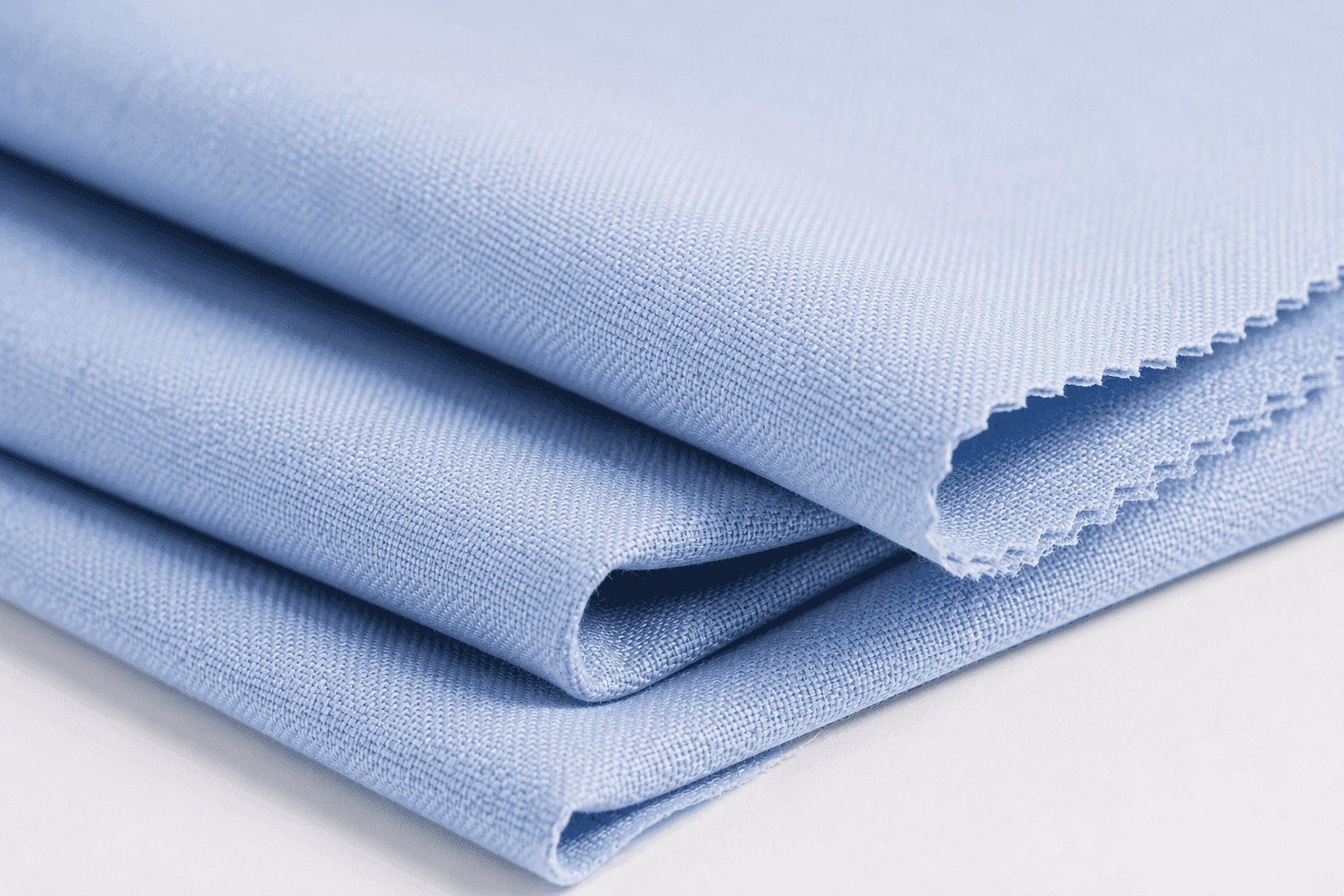
Cotton-polyester blends remain one of the most trusted hospital uniform fabrics globally and are highly suitable for Gulf climate conditions. Cotton provides softness, breathability, and skin comfort, while polyester improves durability, wrinkle resistance, shape retention, and faster drying.
These blends withstand repeated 60-90°C industrial hospital laundry cycles — a non-negotiable requirement in healthcare institutions. Many hospitals initially choose polyester-heavy uniforms to reduce procurement costs, but staff often begin experiencing heat discomfort during longer shifts. Cotton-poly blends provide a much better balance between durability and day-to-day wearability.
Best for: Nurses · General ward staff · OP departments · Administrative healthcare teams
2. Moisture-Wicking Performance Fabrics
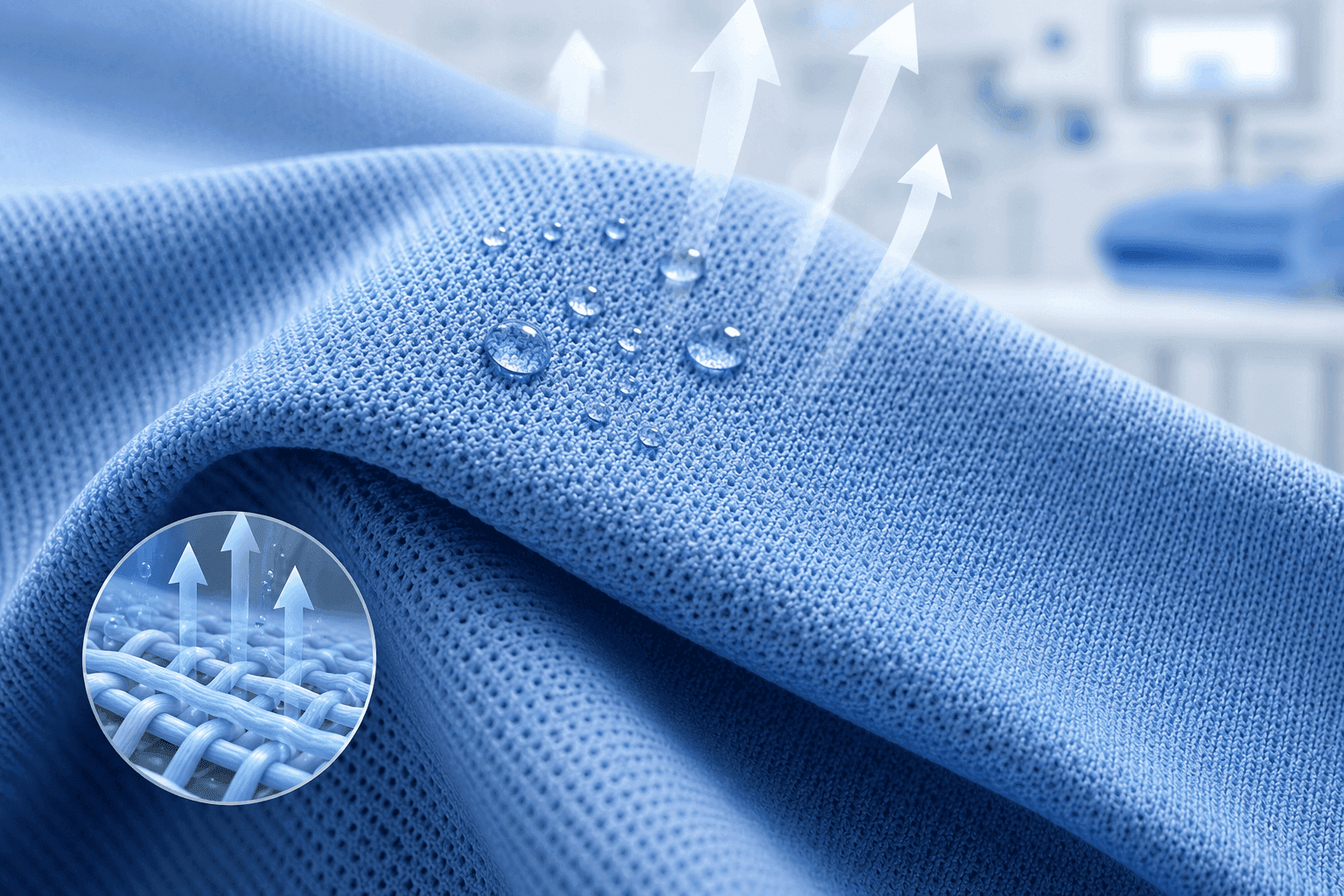
Moisture-wicking fabrics are engineered to pull sweat away from the body and allow rapid evaporation. In hot and humid conditions, this significantly improves comfort during long hospital shifts.
Breathable medical scrubs designed for Qatar's climate should always include moisture-management capability. Fabrics that retain sweat quickly become uncomfortable and distracting, especially during physically demanding routines.
Best for: Emergency departments · ICU teams · Ambulance staff · High-movement nursing roles
3. Antimicrobial Medical Uniform Fabrics
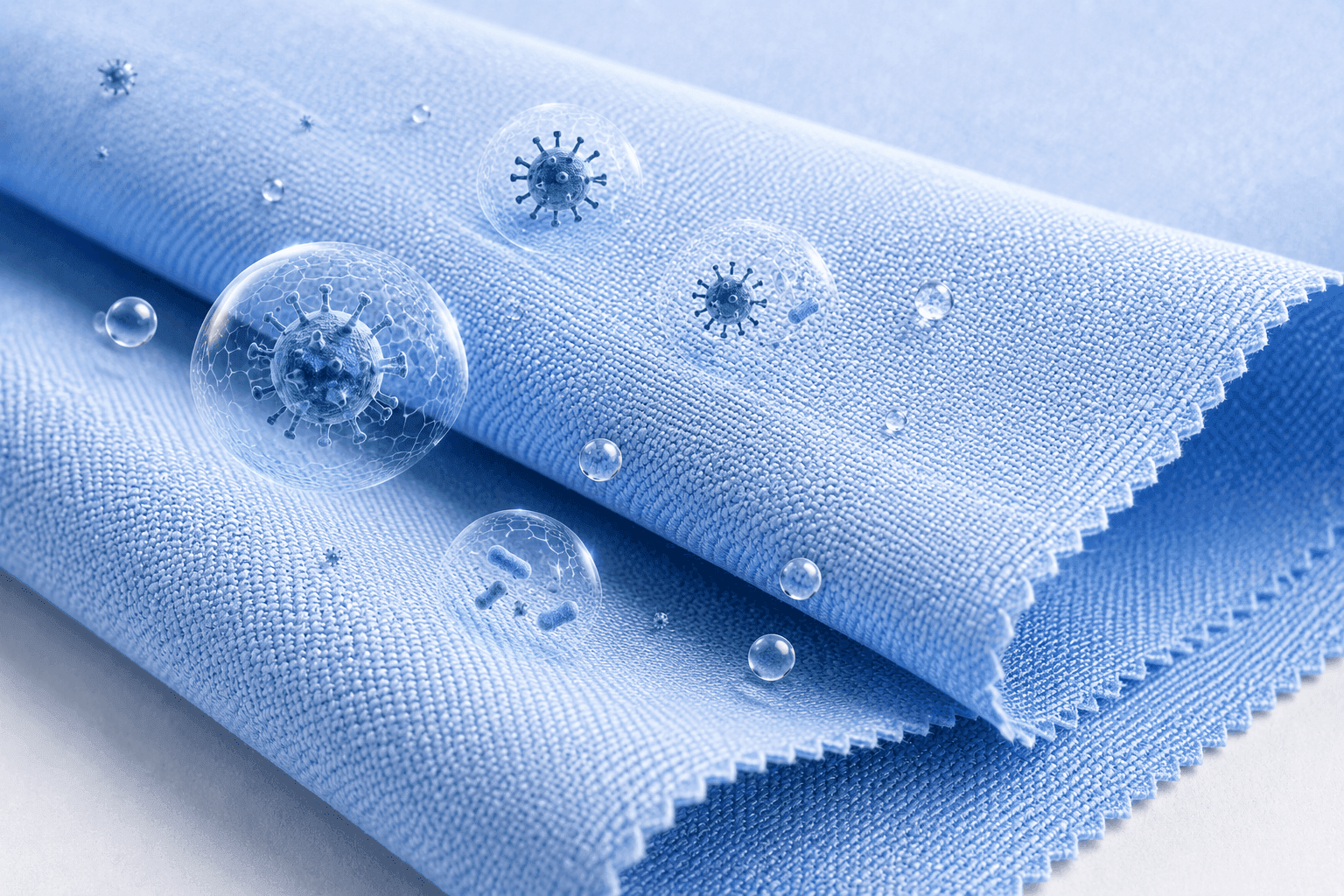
Antimicrobial fabrics use silver-ion or zinc-based technologies that help reduce bacterial and fungal growth on uniforms. For hospitals and clinics, antimicrobial uniforms support better hygiene control, odor reduction, improved long-shift freshness, and reduced contamination risk.
In healthcare environments, fabric hygiene directly affects operational standards. Uniforms exposed to repeated patient interaction, moisture, and extended wear must support infection-control practices while maintaining comfort and durability.
Best for: Patient-facing environments · High-contact medical departments · ICU · Infection control zones
4. Four-Way Stretch Scrub Fabrics
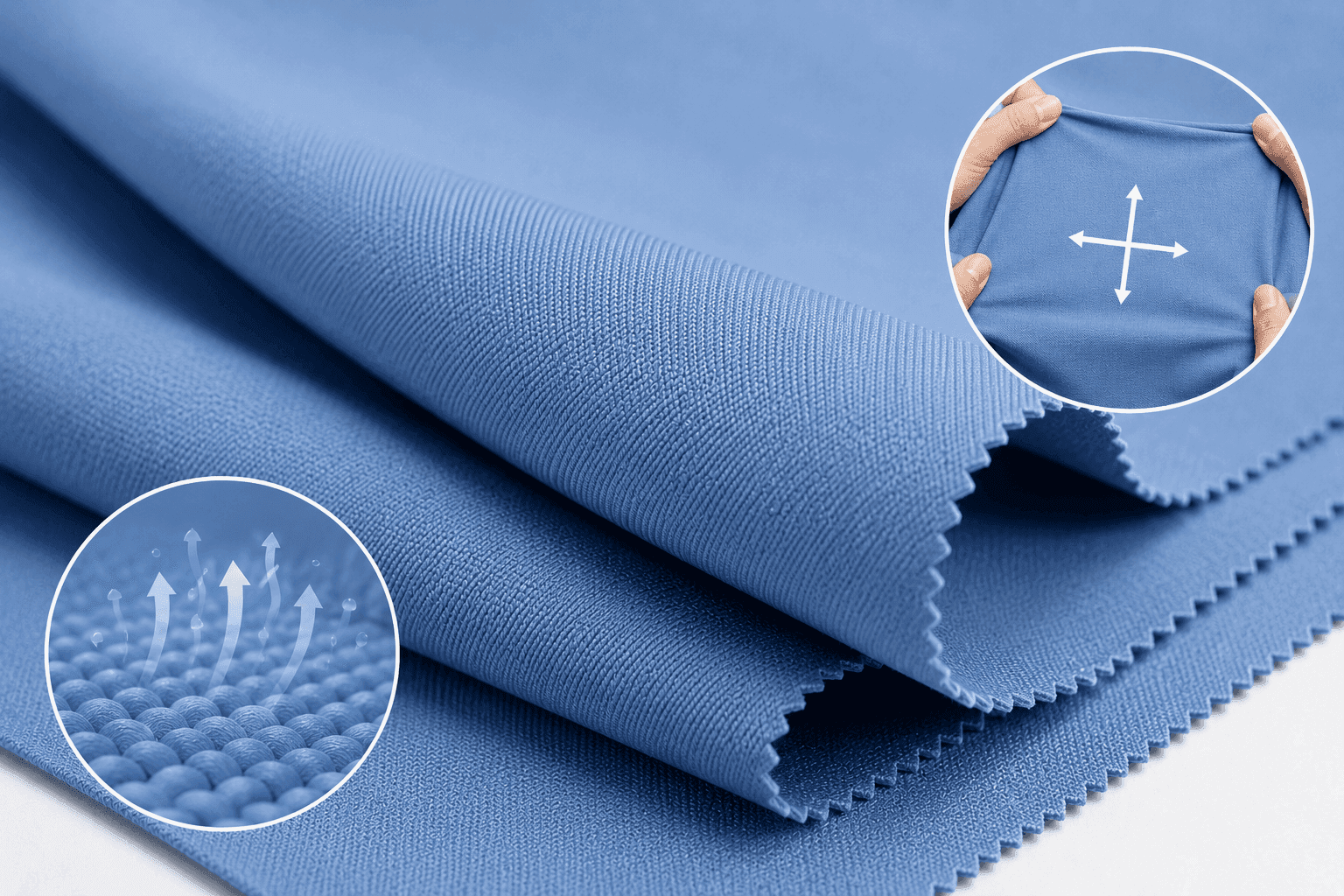
Four-way stretch fabrics include elastane or spandex components that allow unrestricted movement throughout physically demanding shifts. Healthcare professionals often bend, lift, stretch, and move rapidly throughout the day — rigid fabrics become uncomfortable very quickly during long working hours.
Stretch-performance uniforms improve mobility without compromising professional appearance.
Best for: Surgical scrubs · Physiotherapy teams · Emergency room staff · Pediatric care units
5. Fluid-Repellent Hospital Fabrics
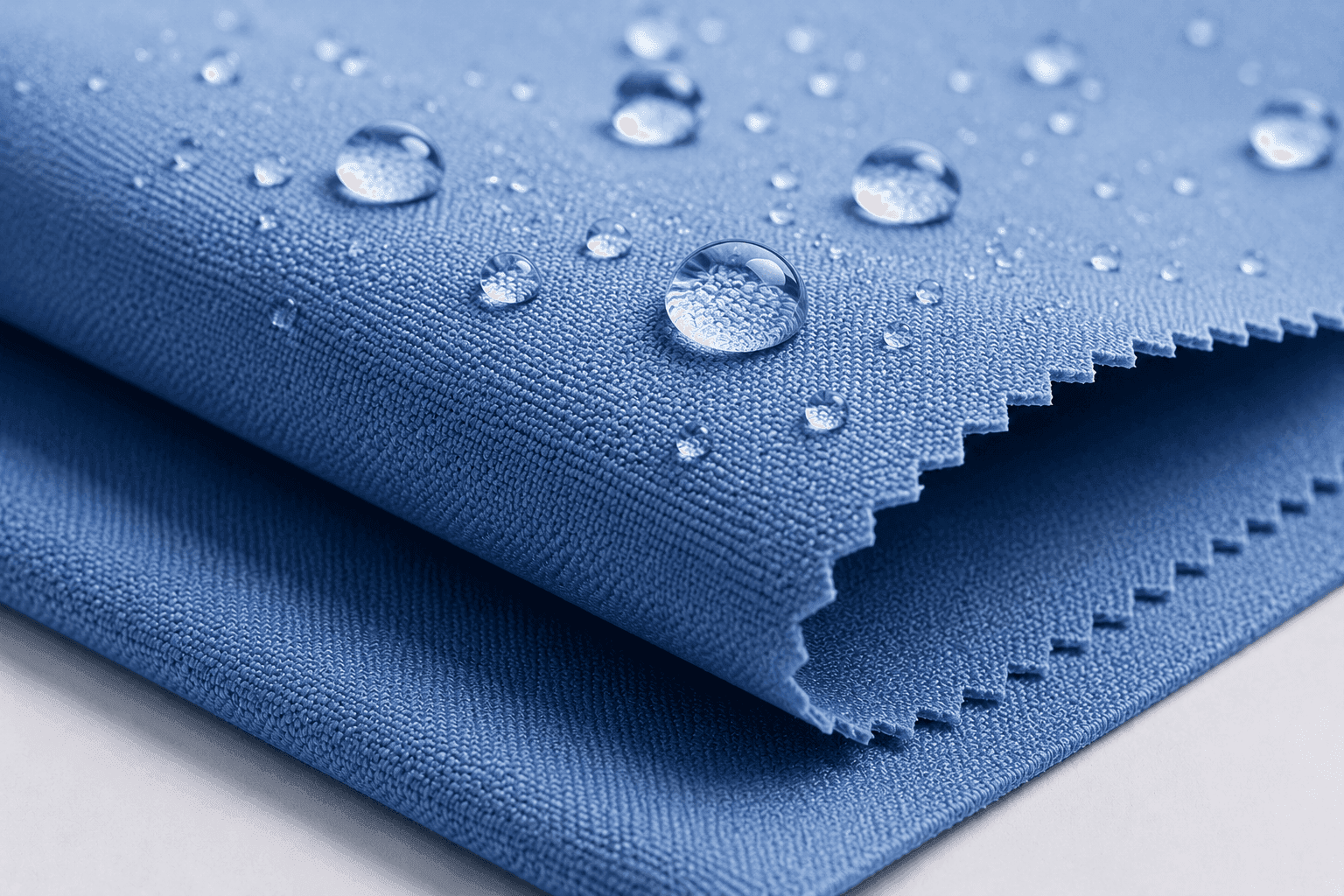
Fluid-repellent fabrics use DWR (Durable Water Repellent) coating technology that helps liquids bead and roll off the surface instead of soaking into the material. Healthcare facilities increasingly consider fluid resistance a non-negotiable feature for critical medical departments.
Best for: Surgical departments · Laboratories · Emergency response teams · ICU environments
6. Microfibre Healthcare Fabrics
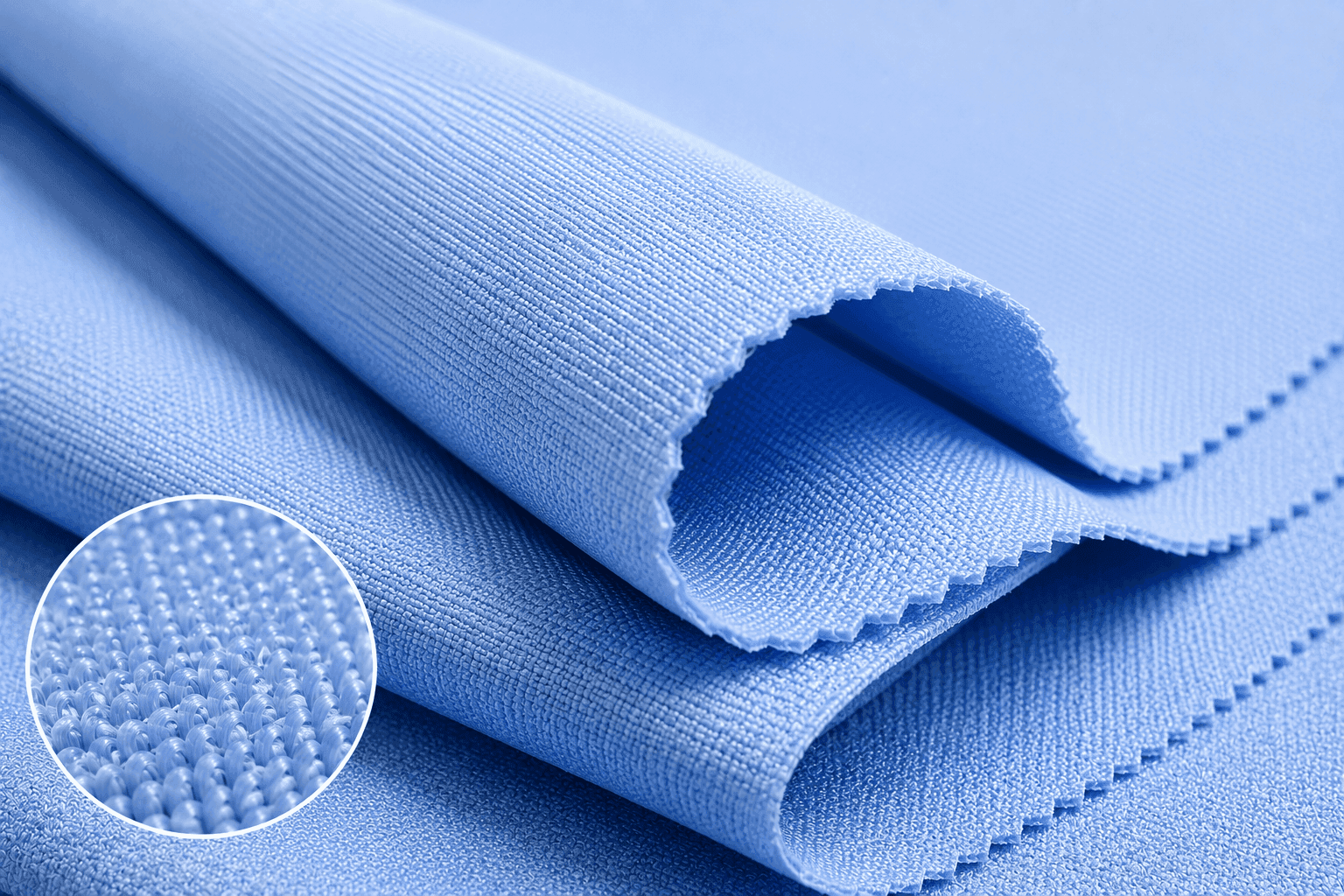
Microfibre fabrics are lightweight, breathable, smooth, and visually premium. Private hospitals and upscale healthcare facilities often prefer microfibre medical uniforms for front-office and patient-facing teams because of their polished appearance and comfort.
Best for: Premium healthcare facilities · Reception & front-office teams · Patient-facing concierge roles
Fabric Comparison Table for Hospital Uniforms
| Fabric Type | Durability | Best For | Antimicrobial | Comfort Level |
|---|---|---|---|---|
| Cotton-Poly Blend | High | Nurses & General Staff | Yes | Excellent |
| Moisture-Wicking | Medium-High | Emergency & ICU | Yes | Excellent |
| Four-Way Stretch | Medium | Surgical & Active Roles | Optional | Very High |
| Fluid-Repellent | High | OT & Emergency | Yes | Good |
| Microfibre | Medium | Premium Healthcare | Optional | Excellent |
Why Many Hospital Uniform Suppliers Get It Wrong
Many medical uniform suppliers still focus mainly on pricing or appearance instead of long-shift performance and climate suitability. Most fall into two categories:
Generic Bulk Import Suppliers
These suppliers import low-cost standard polyester uniforms not designed for Gulf healthcare conditions — resulting in heat discomfort, sweat retention, faster fabric degradation, and increased staff complaints. Cheap uniforms often become expensive through higher replacement frequency and reduced staff satisfaction.
Fashion-First Uniform Suppliers
Some suppliers prioritize branding, embroidery, and aesthetics while ignoring fabric engineering and long-shift comfort. A visually attractive uniform still fails operationally if healthcare staff feel physically uncomfortable halfway through their shifts.
The Untapped Gap in the Healthcare Uniform Market
Very few suppliers position hospital uniforms specifically around Gulf climate challenges. The combination of 42–46°C outdoor temperatures, high humidity, and aggressive indoor air conditioning creates a thermal cycle that generic medical uniforms are simply not designed to handle.
What Healthcare Procurement Teams Look For
Healthcare procurement managers increasingly evaluate medical uniform suppliers based on long-term operational value rather than simple unit pricing.
Infection Control Compliance
Uniforms must survive repeated 60–90°C industrial washing while maintaining color, structure, durability, and hygiene standards.
Customization Capability
Healthcare institutions increasingly look for department color coding, embroidered logos, designation badges, and inclusive sizing. Customization is now part of operational professionalism.
MOQ Flexibility
Many small clinics and specialty centers struggle with suppliers demanding high minimum order quantities. Suppliers offering flexible bulk hospital uniform orders are increasingly valuable for growing facilities.
Cost Per Wear
A durable uniform lasting 18–24 months often delivers better operational value than lower-cost alternatives requiring frequent replacement.
Sustainability in Healthcare Uniforms
Hospitals and healthcare groups are gradually paying more attention to sustainable procurement practices — including longer-lasting fabrics, reduced material waste, and responsible textile sourcing.
Durable uniforms that last longer help reduce replacement frequency and operational costs. Many institutions now prioritize practical sustainability — uniforms that remain functional, durable, and wearable for longer periods rather than focusing only on environmental messaging.
Why FigLeaf Is Built for This Market
At FigLeaf, every hospital uniform is designed with climate performance, healthcare functionality, and long-shift comfort in mind. Our healthcare uniform range combines:
- Antimicrobial-treated fabrics
- Moisture-wicking performance
- Fluid-repellent protection
- Four-way stretch mobility
- Industrial-laundry-tested durability
- Department color coding
- Embroidery customization
- Flexible MOQ options
- Fast delivery across Qatar
We supply premium hospital uniforms in Qatar for hospitals, clinics, laboratories, and medical centers across Qatar.
If healthcare institutions are still sourcing uniforms based only on price per piece, they may be measuring the wrong thing. The real long-term cost appears in staff comfort, replacement frequency, infection-control standards, and the professional impression healthcare teams create every day.
FigLeaf helps healthcare institutions across Qatar choose hospital uniforms built for climate performance, staff comfort, durability, and long-term operational value.